Helena Hayes | January 2026
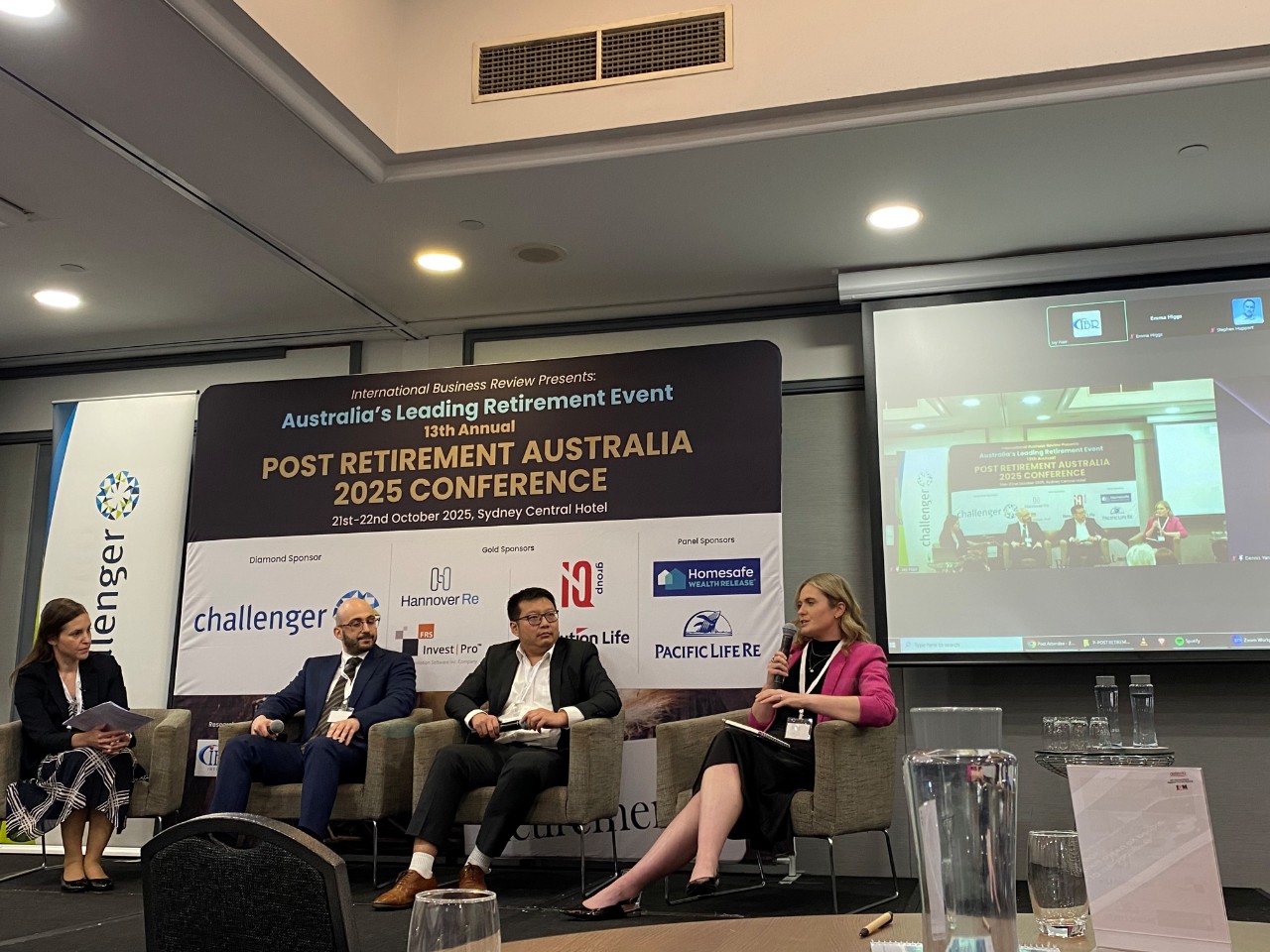
At the recent IBR Post-Retirement Conference in Sydney Australia, Helena Hayes, Director Individual Retirement, had the opportunity to take part on a panel discussion and reflect on what success in retirement for Australians truly means.
Measuring Success in Retirement: Beyond Account Balances
Retirement success is no longer just about account balances. It is a conversation that continues to evolve as retirement systems around the world grapple with shifting demographics, rising life expectancies, and a structural transition from defined benefit (DB) frameworks to defined contribution (DC) systems- reshaping how retirement risk is shared between individuals and institutions.
While much of the industry conversation focuses on measuring success from a member perspective, whether individuals are achieving adequate and sustainable retirement incomes, and feel financially secure and confident in their outcomes, our view also considers success from a system perspective. At a system level, it is important to ask: how is retirement income risk allocated across the system?
In Australia, the reality is that most of the risk in retirement remains with the individual. For some retirees, this is acceptable as they have the means and the risk appetite to self-manage their income and investments. However, for many others, this model is far from optimal.
Learning from Global Systems
In the UK in 2024 approximately10-15% of defined contribution (DC) pension holders purchased a lifetime annuity when first accessing their funds. While some may argue that this proportion is still below what is required for true system level optimisation, it remains significantly higher than the Australian experience.
What is driving that difference? The UK benefits from a long history of compulsory annuitisation, which has helped normalise lifetime income products. Equally important, there are structures and processes in place to support retirees as they make complex financial decisions. Initiatives such as wake-up packs, MoneyHelper, Pension Wise, and the availability of standardised, easy-to-compare annuity products across trusted providers all contribute to greater engagement and confidence. These mechanisms help individuals recognise and mitigate the risks they face in retirement and help the system as a whole deliver more stable outcomes.
Empowering Confident Decisions
Another key ingredient in a successful retirement system is confidence. Are retirees empowered to make informed, confident decisions about their future income?
To explore this, we recently partnered with the Harvard Consulting Club to conduct market research and customer focus groups across the UK, US and Australia. The findings were strikingly consistent: most people want guaranteed lifetime income products, but they often perceive them as “too good to be true.”
In Australia, this lack of trust stood out even more starkly when compared with the US and UK. This is particularly interesting given the high levels of trust Australians place in their superannuation funds. There is an opportunity here to leverage and build upon that existing trust, extending it to the providers and products that can help deliver the secure retirement income Australians are telling us they want.
Turning Insight into Action
One of the most actionable insights from the research was how strongly Australians respond to real-life stories. People connect emotionally to the experiences of others like them. As an industry, we need to consider how to bring these products to life through relatable narratives that demonstrate not just the financial benefits, but the peace of mind and quality of life that guaranteed income can provide.
Looking Ahead
If we are to measure success in retirement beyond balances, we need a framework that reflects both individual outcomes and system resilience. That means helping retirees manage risk more effectively, fostering trust and understanding, and enabling confident decisions through clarity and connection.
Ultimately, a successful system is one in which retirees not only have enough, but also feel secure knowing their income will last as long as they do. It is equally important that they feel confident spending the money they have worked hard to save throughout their lives, enjoying the retirement they have planned for with the assurance that their income is sustainable.

Helena Hayes
Director | Individual Retirement, Asia & Australia






.png)















.png)
.png)



.png)