Ian Rowe | September 2026
Expectations vs Reality: New Insights into the UK Protection Claims Experience
- Consumers have low expectations for positive claims outcomes- even though experience of the claims process is overwhelmingly positive
- The majority of consumers, around 4 out of every 5, place importance on human involvement when making a protection claim
- Protection customers with experience of making a claim are more comfortable with the application of AI in the process
This article explores these findings in more detail.
For all the advances the protection industry has made in delivering positive customer outcomes, a significant perception gap remains. Many consumers still underestimate the likelihood of a claim being paid and are uncertain about what the claims experience involves. Yet our latest consumer research tells a very different story. Drawing on the views of 2,000 UK consumers and people who have experienced the claims process firsthand, the findings reveal not only a high level of satisfaction among claimants, but also important insights into how trust is built, what role technology should play, and why human support continues to matter when people need it most
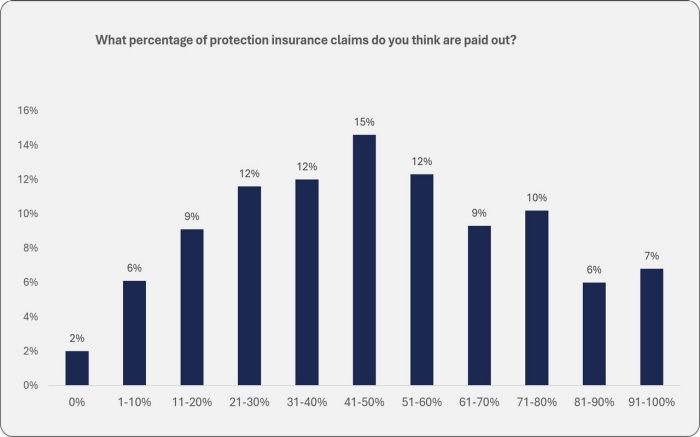
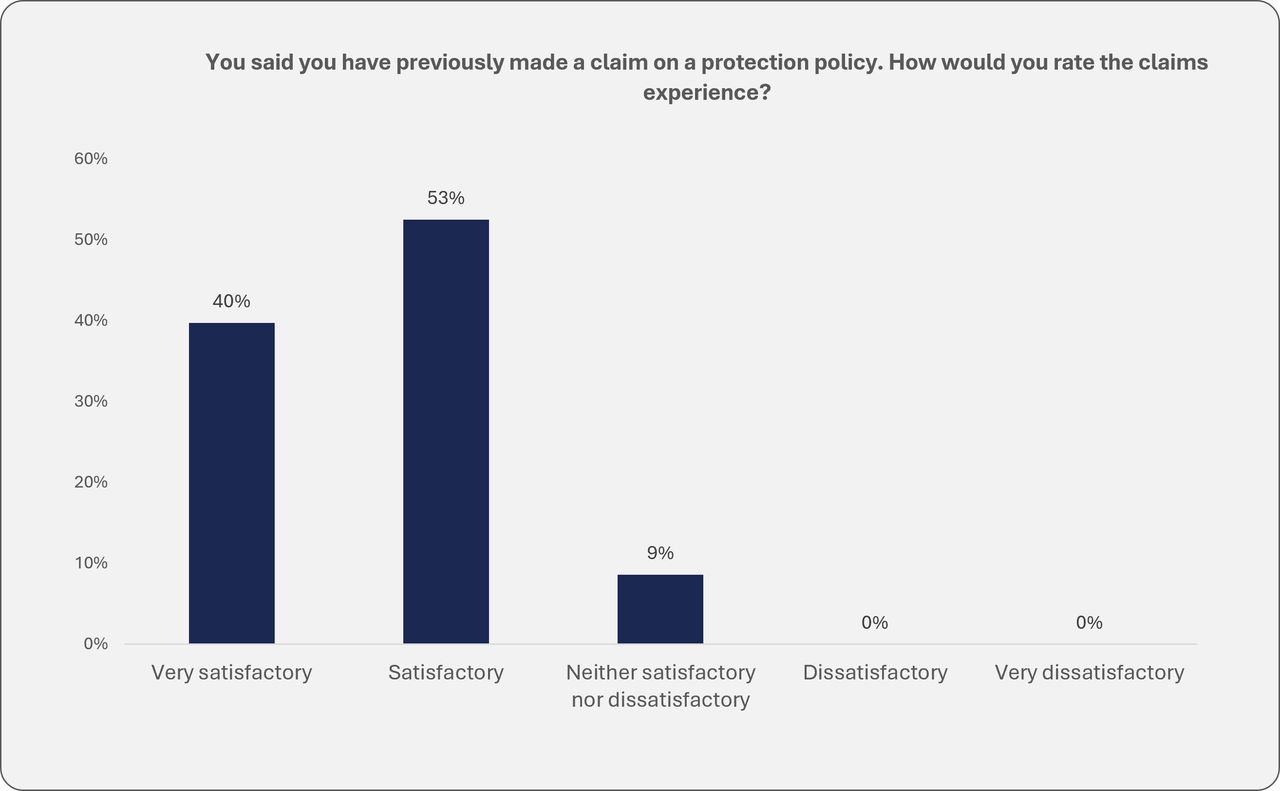
One of the clearest themes is the gap between perception and reality. Consumers significantly underestimate the likelihood of a protection claim being paid, yet those with direct experience of the claims process report overwhelmingly positive outcomes and high levels of satisfaction. This suggests that the industry's challenge is not only delivering good customer outcomes, but also helping consumers understand the support that protection provides when it is needed most.
Consumers underestimate claims outcomes, while customers who have experienced a claim report high levels of satisfaction.
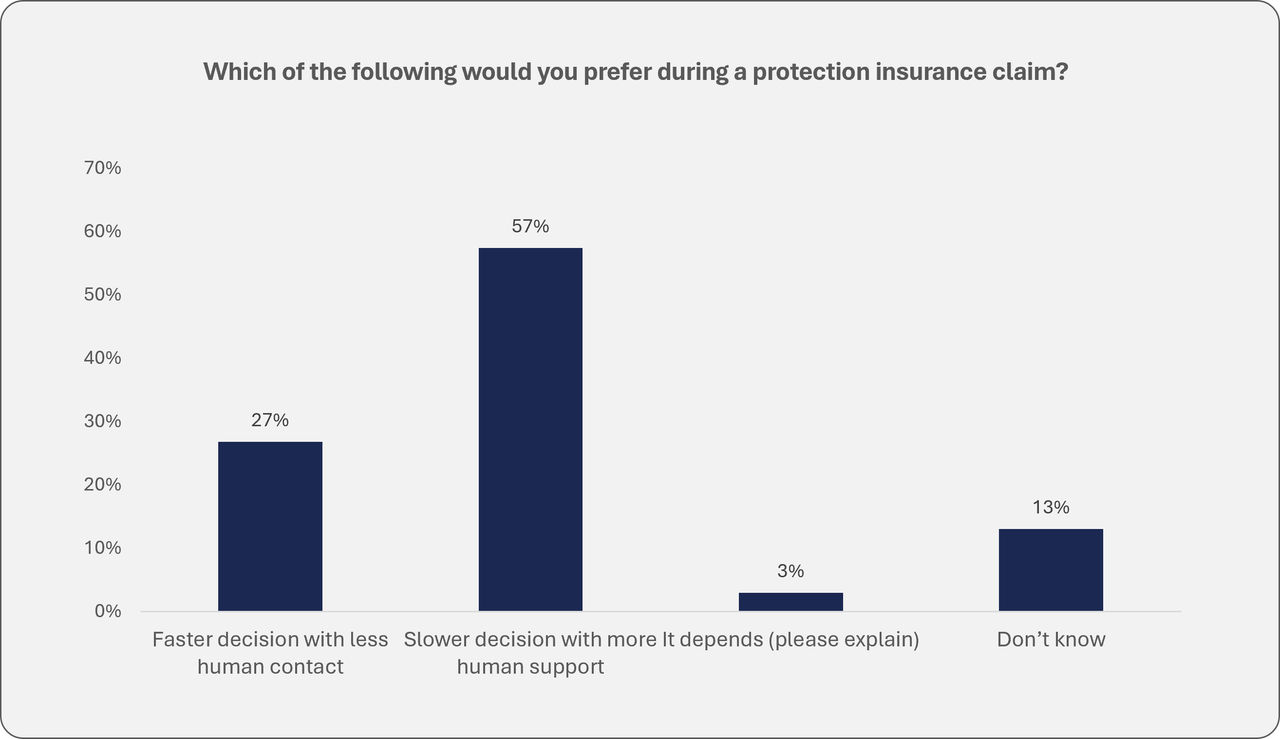
The research also highlights the importance of the human element. While consumers expect technology and AI to make claims processes faster and more efficient, most still value greater human support over a quicker, more automated experience.
Most consumers would trade speed for greater human support during the claims process.
Attitudes towards technology are equally revealing. While the majority of consumers are cautious about the use of AI in claims assessment, respondents who had previously made a protection claim were notably more supportive than those without claims experience.
Claimants were more supportive of the use of AI in claims assessment than respondents without claims experience.
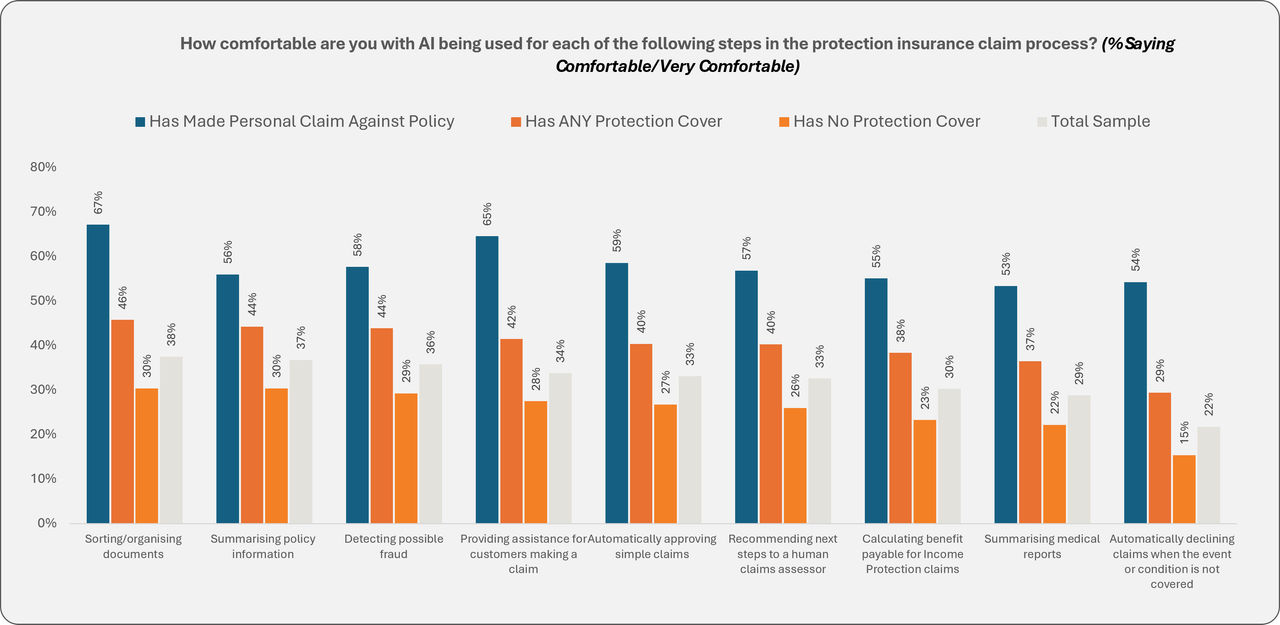
This finding should be viewed alongside the overwhelmingly positive experiences reported by respondents who had been through the claims process. While the research does not explain the reasons for this difference, it suggests that those with claims experience may hold more nuanced views about the role of technology in claims.
Irrespective of how comfortable our consumer groups were with technology, around four in five respondents across all segments indicated that human involvement remained important when making a protection claim, reinforcing the continuing importance of maintaining a human element within the claims process.
The findings point to an important challenge, and opportunity, for the protection industry. While providers continue to invest in faster processes and new technologies, trust remains the foundation of a positive claims experience. Closing the gap between consumer perceptions and the reality of claims outcomes will need more than innovation alone. It will require clearer communication, greater transparency and a continued focus on human support at moments that matter most. For an industry built on delivering financial security in times of need, helping consumers understand the value of that promise may be just as important as fulfilling it.

Ian Rowe
Director, Underwriting & Claims Services, Protection, Europe & North America







.png)














.png)
.png)



.png)