Anika Bains and Mike Wilson | August 2026
Plastics are part of everyday modern life. They are used in packaging, clothes, household items and medical equipment. They are cheap, light and durable. But as plastic use has grown, so has concern about what happens when plastic breaks down into very small pieces, and where those pieces end up.
These small plastic fragments are called microplastics. They are now seen as an important part of the exposome, a framework that considers the totality of environmental exposures a person experiences throughout their life, and how those exposures interact with biology to shape health outcomes. Microplastics are particularly relevant because they are widespread, difficult to avoid and not yet fully understood.
Learn more about the exposome in the first article in our series, Life’s invisible influences: introducing the exposome.
What are microplastics?
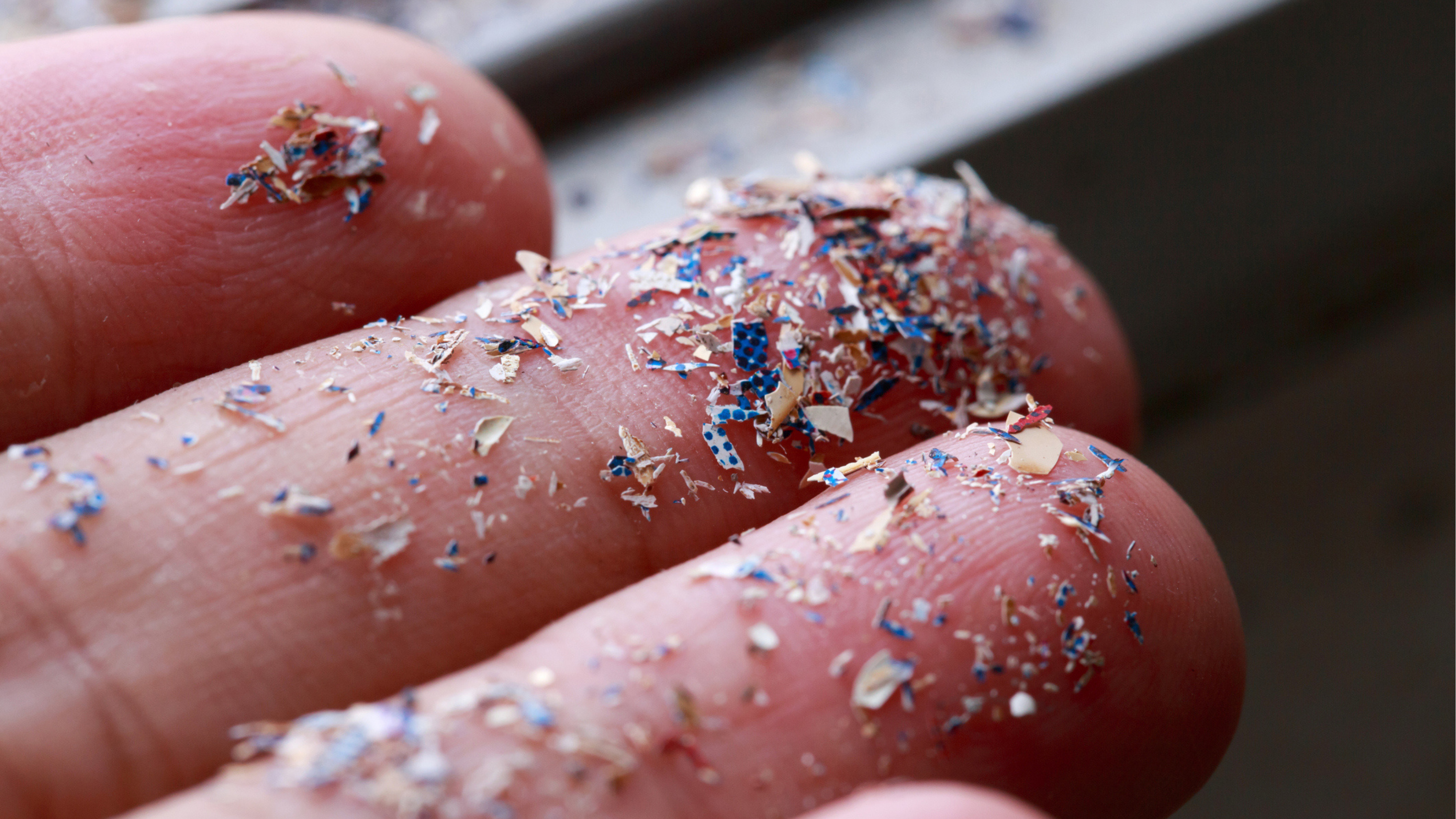
Microplastics are plastic particles smaller than 5 millimetres. But concerns mainly relate to far smaller pieces, called nanoplastics, which can be many times thinner than a human hair.
They come from two main sources:
- Plastics that are made small on purpose, such as microbeads once used in face scrubs
- Larger plastic items that break down over time, such as food containers, clothes and packaging.
Global plastic production has increased sharply over recent decades. Hundreds of millions of tonnes are produced each year, and total production is expected to keep rising. As plastics age and wear down, more microplastics are released into the environment.
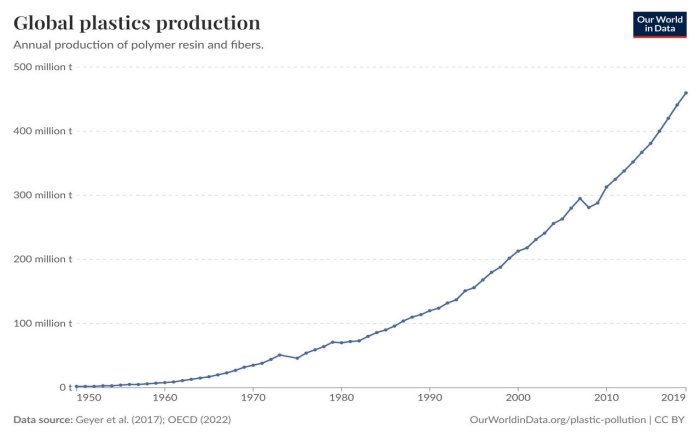
Figure 1 Global plastics production | Our World in Data
Microplastics are one example of a growing group of modern environmental exposures. Another is PFAS (per- and polyfluoroalkyl substances), often called ‘forever chemicals’. These are used in everyday products such as non-stick cookware, waterproof fabrics and food packaging because they resist water and grease.
While microplastics are physical particles and PFAS are chemicals, they share some important features. Both are widespread, slow to break down, and now found in the environment and in human bodies. They are often discussed together because they can cause exposure to humans in overlapping ways.
Where are microplastics found?
The defining feature of microplastics is their ubiquity. They have been detected in many environments we encounter daily, including:
- Water, including bottled and tap water
- Food, from seafood to fruit, vegetables and rice
- Air, particularly indoors
- Household dust, generated by textiles, furnishings and packaging.
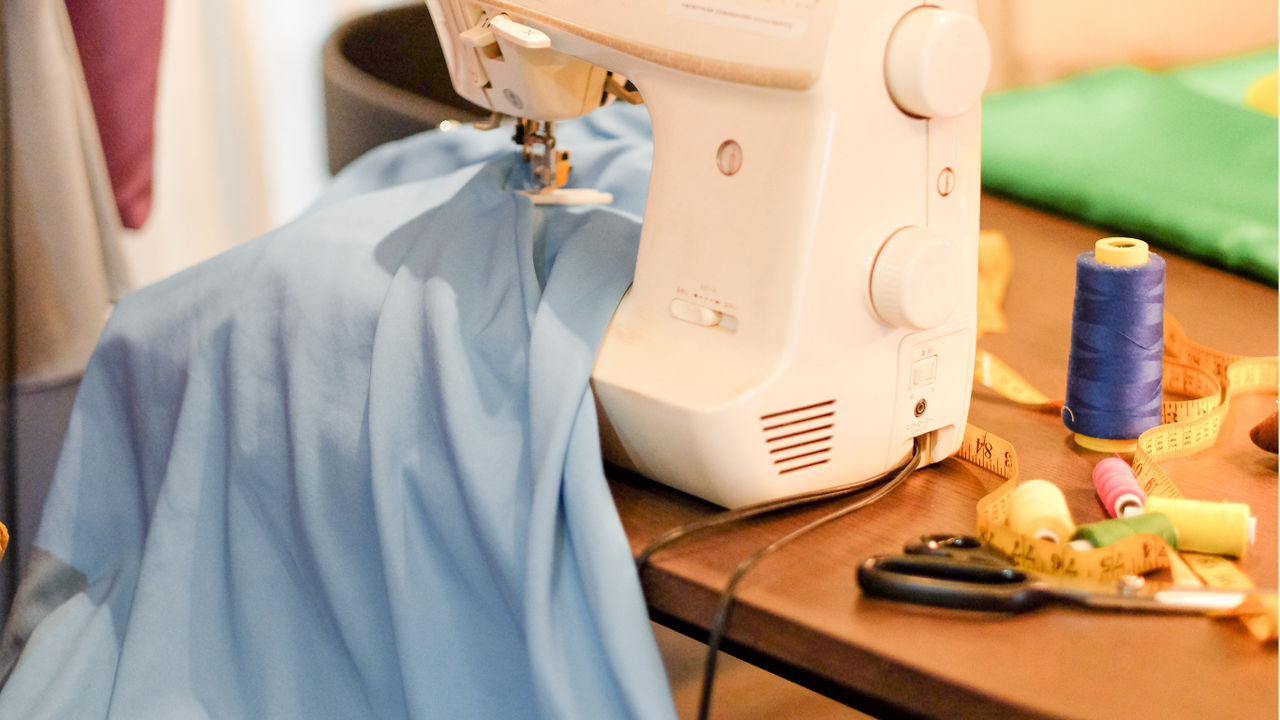
Indoor air is getting more attention. Many modern fabrics - like polyester, nylon and acrylic - shed tiny plastic fibres when we wear or wash them. These fibres collect in dust and can float in the air we breathe. In many cases, indoor air contains more microplastics than outdoor air.

How do they enter the body?
There are two main exposure pathways: ingestion and inhalation.
A large amount of what we swallow probably passes through the body and is excreted. However, some very small particles appear able to cross into tissues.
Breathing microplastics may be more important. Tiny particles can reach deep into the lungs and pass from there into the bloodstream. Microplastics have now been found in human blood, lung tissue, arterial plaques, and brain tissue. This shows that exposure from our environment can lead to plastic particles ending up inside the body.
What does the science say?
The science is still developing. Measuring microplastics in human tissue is difficult, and contamination can affect results. Because of this, some findings are debated and researchers are still improving testing methods. In fact, a 2026 study suggested the use of common gloves in scientific tests could cause thousands of false-positive particles and material overestimation of microplastic pollution. [1]
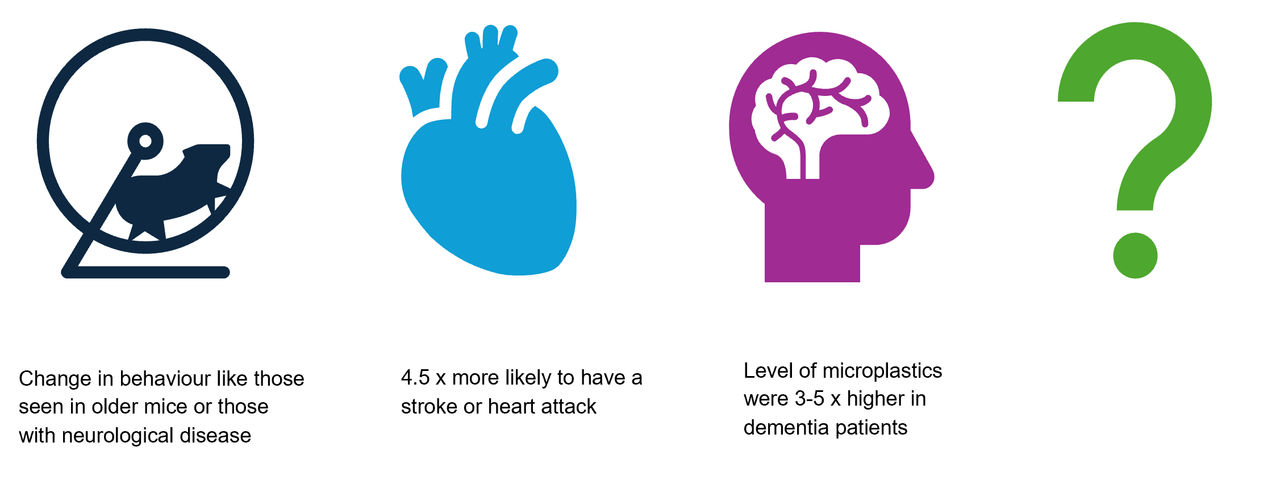
Even so, some studies are worth noting. Evidence from animal studies has shown that exposure to microplastics can trigger inflammation and even alter behaviour. While translating these findings directly to humans is not straightforward, they provide an early indication that these particles may not be as biologically inert as once assumed. [2]
In humans, the picture is only just beginning to emerge. Recent research has identified microplastics embedded within fatty plaques in the arteries. Strikingly, individuals whose plaques contained these particles appeared more likely to experience heart-related events than those without detectable plastics. Although this does not establish a direct causal link, it highlights a potentially important association that warrants further investigation. [3]
Similar patterns are being seen elsewhere in the body. Microplastics have been detected in human brain tissue, with some studies finding higher concentrations in individuals with dementia compared to those without. Again, causation remains unproven, but the presence of these particles in such sensitive tissues raises critical questions about the long-term effects of exposure. [4]
What is perhaps most striking is how widespread studies suggest their presence has become. Microplastics have been identified not only in the brain, but also in breast milk and even in the placenta - suggesting that exposure may begin before birth. [5]
What we don’t yet know
In addition to some doubts about false-positives in studies, several key questions remain unanswered:
- Are microplastics materially harmful, or mostly harmless?
- Are some types of plastic worse than others?
- Is there a safe level of exposure?
- How do microplastics interact with other exposures like pollution or chemicals?
Plastics contain many different chemicals, some of which are known to affect hormones or cells. Answers to these questions may depend on the specific types and concentrations of plastics involved. While some particles may turn out to be harmless, the amount and variety of plastic we are exposed to makes scientists cautious.
Reducing exposure
Avoiding microplastics completely is unrealistic, given their widespread presence in the environment. However, for people concerned, some everyday choices may reduce potential exposure, even while the long-term health implications of microplastic exposure are still being studied.
In the kitchen, this can include avoiding heating food in plastic containers, using alternatives such as glass or ceramic where practical, replacing heavily worn non-stick cookware, and considering materials such as wood or bamboo for chopping boards. Washing foods such as rice may also reduce some surface contamination.
Around the home, potential exposure can be reduced by measures such as choosing natural fibres where possible, reducing unnecessary washing of synthetic clothing, and maintaining good indoor cleaning practices, including regular vacuuming with an effective filter to reduce household dust.
Why microplastics matter in the exposome
Microplastics are a clear example of an exposome issue. They are everywhere, largely unseen, and their long‑term health effects are still uncertain. For health systems and insurers, they highlight the need to think about slow, background exposures that may shape health over time.
The appropriate response, for organisations and for individuals, is not to assume a proven hazard, but to understand risk exists, monitor emerging evidence, assess potential implications and ensure that responses can evolve as understanding improves.
What comes next
How do the environments around us shape both health and inequality? In the third and final article in the series, we will explore the impact of air pollution, light pollution and access to green spaces.
References
[2] Microplastics: A Real Global Threat for Environment and Food Safety: A State of the Art Review - PMC
[3] Can microplastics in blood vessels raise the risk of stroke? | British Heart Foundation
[4] Bioaccumulation of microplastics in decedent human brains | Nature Medicine
[5] Microplastics exposure: implications for human fertility, pregnancy and child health - PMC

Anika Bains
Manager, Market Enablement, Protection, Europe

Mike Wilson
Director, Medical Analytics







.png)














.png)
.png)


.png)